
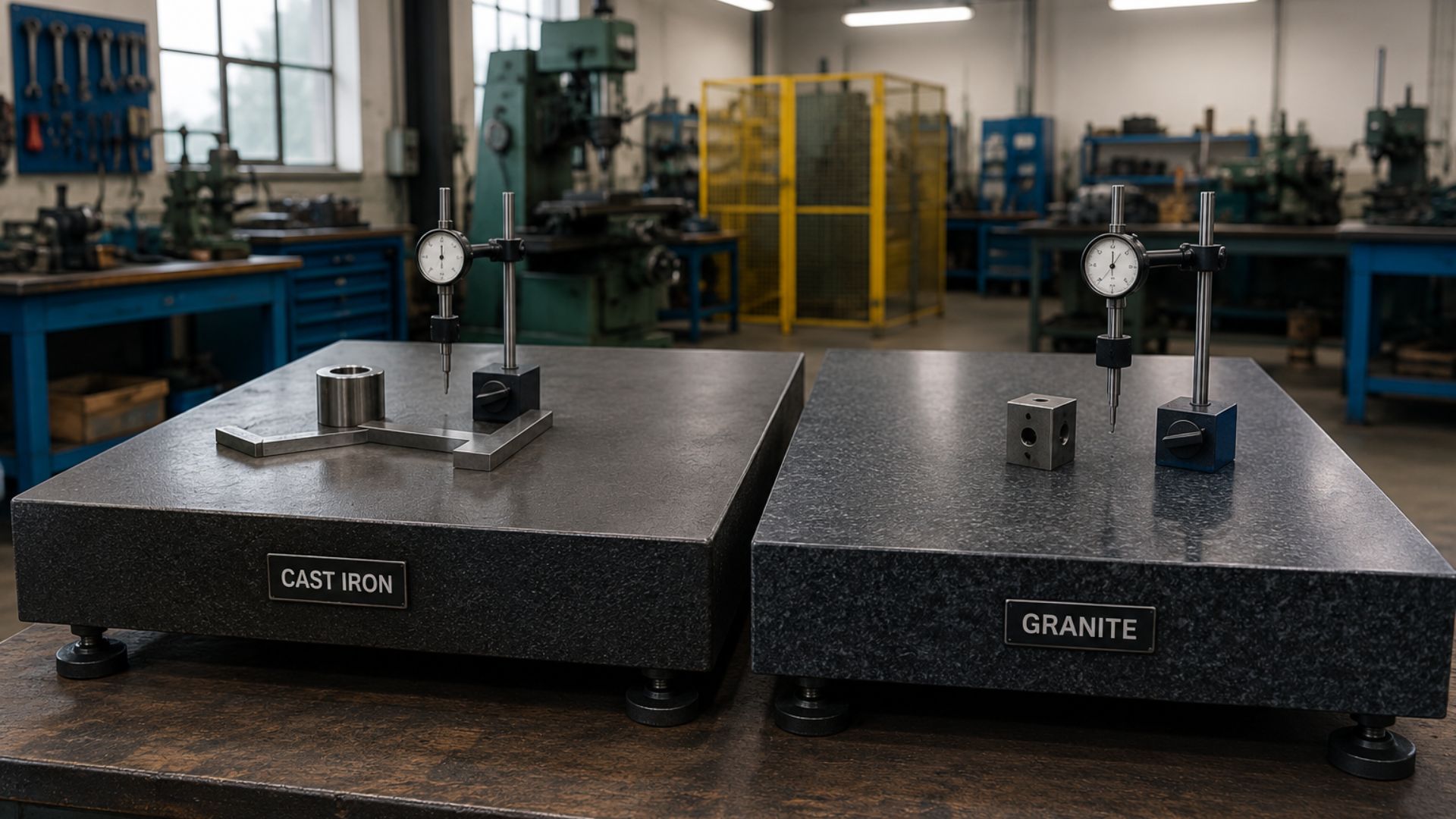
Cast iron and granite are the two dominant materials used to manufacture precision surface plates across Indian toolrooms, inspection departments, and metrology labs. Both deliver reliable flatness when manufactured correctly, but they differ significantly in thermal behaviour, wear characteristics, maintenance needs, and cost. Choosing between a cast iron surface plate and a granite surface plate isn't about which material is objectively better. It's about which one matches the environment, workload, and precision demands of your specific shop floor. This guide compares both materials across the factors that actually matter for day-to-day inspection work.
Thermal Stability: Granite's Biggest Advantage
Granite surface plates have a significantly lower coefficient of thermal expansion than cast iron, which means they hold their flatness far more consistently as ambient temperature fluctuates through the day. In workshops without tight climate control, common across much of India, especially during summer months, this thermal stability matters. A granite surface plate will drift less under temperature swings, making it the preferred choice for calibration labs, NABL-accredited standards rooms, and any environment where readings need to stay accurate regardless of shop floor temperature. Cast iron, by contrast, expands and contracts more with temperature change, which can introduce small but measurable flatness deviation if the plate is used across a wide temperature range without adequate acclimatisation time.
Wear Resistance and Durability Under Daily Use
Cast iron surface plates hold a clear advantage when it comes to impact resistance and durability under heavy daily handling. Cast iron is more forgiving of dropped tools, component edges dragged across the surface, and the general wear-and-tear of a busy production floor. Granite, while extremely hard and scratch-resistant, is more brittle. A sharp impact from a dropped gauge block or hardened component can chip or crack a granite plate in a way that a cast iron plate would simply dent or mark without compromising overall flatness. For toolrooms and production inspection areas where the plate sees constant handling, cast iron's toughness often makes it the more practical day-to-day choice, particularly for teams without a dedicated, controlled inspection area.
Surface Hardness and Long-Term Flatness Retention
Granite is considerably harder than cast iron, which means it resists surface wear from repeated sliding contact. Gauge blocks, height gauges, and comparator stands moving across the surface wear it far better over the plate's working life. A granite surface plate used in a calibration lab or precision inspection cell will typically retain its original flatness grade longer than a cast iron plate under equivalent use, simply because the surface doesn't wear down or develop low spots as quickly. Cast iron surface plates, particularly those hand-scraped to Grade 1 accuracy under IS 2285:2003, still perform reliably for years with proper care, but they do require more frequent recalibration in high-throughput environments compared to granite.
Corrosion Resistance and Maintenance
Granite doesn't rust, doesn't require oiling, and is naturally non-magnetic, which makes it a strong choice for humid environments, coastal facilities, or shops where corrosion is a persistent concern. Cast iron, being a ferrous material, requires a light protective oil coating and regular maintenance to prevent surface rust, particularly in humid regions across Tamil Nadu and coastal India. For shops running magnetic-base indicator stands or magnetic fixtures, cast iron's ferrous nature is actually an advantage: magnetic bases grip a cast iron plate directly, while granite plates require alternative fixturing since magnetic bases have no surface to grip.
Cost Comparison: Cast Iron's Practical Edge
Cast iron surface plates are generally more cost-effective to manufacture and purchase than granite plates of equivalent size and accuracy grade, which makes cast iron the more budget- friendly option for shops equipping multiple inspection stations or scaling up toolroom capacity. Granite's premium pricing reflects both raw material cost and the precision lapping process required to achieve tight flatness tolerances. For shops balancing budget against performance, cast iron often delivers the best value for general inspection and toolroom work, while granite becomes worth the additional investment specifically where thermal stability and long-term flatness retention are business-critical, such as calibration labs and reference standards rooms.
Making the Right Choice for Your Shop
If your work involves a climate-controlled calibration lab, NABL-traceable reference standards, or long-duration precision measurement where temperature drift matters, granite is the stronger choice. If your work happens on an active production or toolroom floor with heavier daily handling, magnetic fixturing needs, and budget considerations across multiple stations, cast iron typically offers the better balance of durability and cost. Many precision manufacturing facilities in India run both, granite in the calibration lab, cast iron on the shop floor, matching each material to the environment it performs best in. At Sanjeev Precision Technologies, we manufacture both cast iron and granite surface plates in-house, and our team can help you evaluate which material fits your specific application, plate size, and accuracy grade requirement before you commit.